
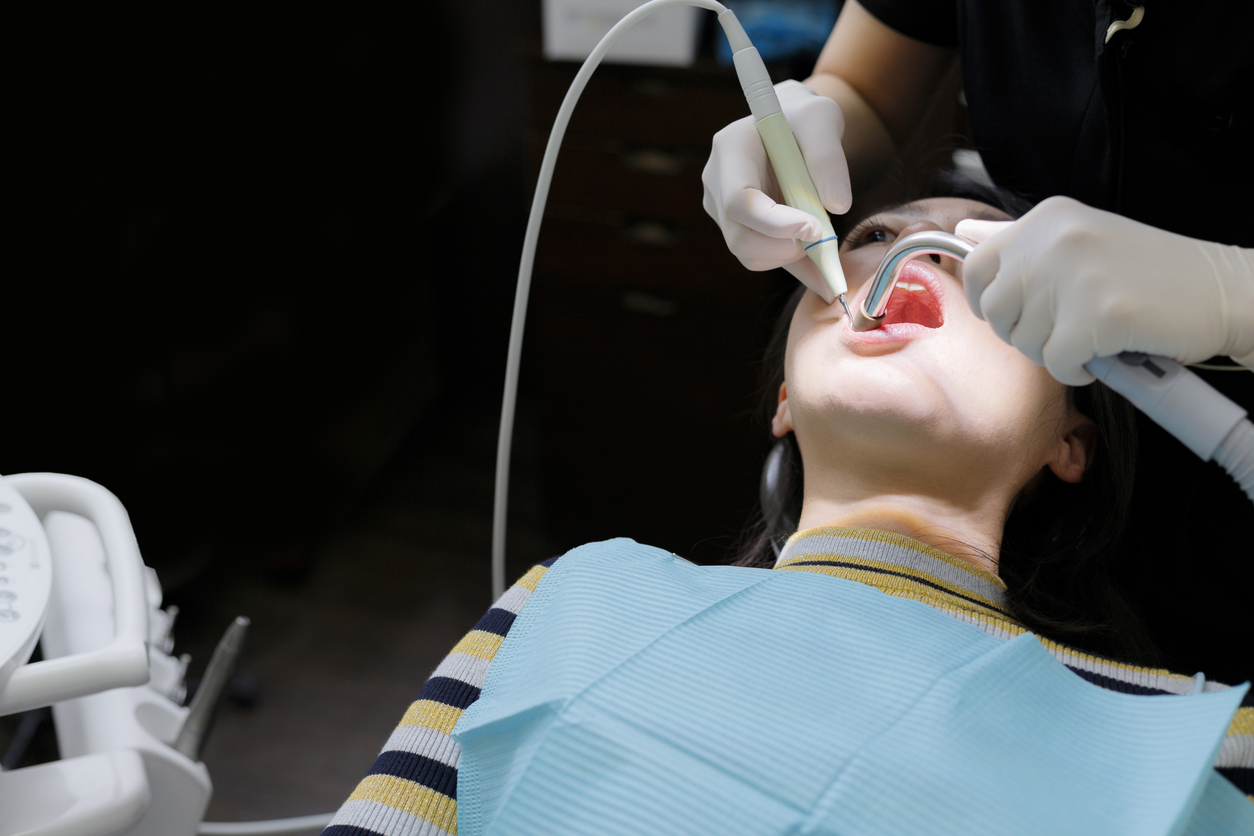
Yes, sedation can be used for deep dental cleanings and periodontal maintenance at St. Matthews Family Dental. Oxide and oral conscious sedation are offered to ensure patients remain comfortable during Scaling and Root Planing (SRP) or post-laser treatments, helping you maintain the critical three-month appointment interval necessary to stop gum disease.
The primary reason Dr. Bevilacqua recommends a three-month interval for periodontal maintenance is rooted in microbiology. Clinical studies show that even after a deep cleaning or laser surgery, the specific bacteria that cause gum disease begin to repopulate and reach destructive levels every 90 days. For many Louisville patients, the thought of coming to our Thierman Lane office four times a year can feel overwhelming. This is exactly where sedation dentistry plays a strategic role. By utilizing nitrous oxide or oral conscious sedation for these recurring visits, we remove the dread of the increased frequency of your visits. Clinical literature supports that nitrous oxide has the ability to raise the patient’s pain threshold, providing rapid analgesia [1] (Khinda et al., 2023). Instead of a stressful chore, your 3-month maintenance becomes a relaxing, hour-long wellness break that helps keep your gum disease in permanent remission.
A common source of confusion for the residents is the difference between ADA codes D1110 (Standard Cleaning) and D4910 (Periodontal Maintenance). A standard cleaning is a preventive measure for healthy patients, focusing on the enamel above the gumline. Periodontal maintenance is a therapeutic treatment. Gum disease creates periodontal pockets, which are gaps between the teeth that require deeper cleaning than a standard cleaning allows. Since these areas are closer to the tooth roots’ nerve endings, they can be more sensitive. We offer sedation for these deep cleanings so our hygienists can be as thorough as possible without causing you any physical discomfort. This ensures a higher level of clinical success compared to sitting through a cleaning while tense.
Tooth maintenance comparisons
Feature | Standard cleaning | Periodontal maintenance | Scaling and root planing |
Purpose | Prevention | Maintenance after gum disease | Active treatment of infection |
Frequency | Every 6 months | Every 3 months | As needed |
Sedation | Optional | Recommended | Yes |
Recovery time | None | Low | High |
Medical literature supports that the laser is re-evolutionizing dentistry with precise, minimally invasive interventions and the ability to stimulate healing [2] (Sachelarie et al., 2024). If you have invested in dental implants to restore your smile, maintenance is your insurance policy. Just like natural teeth are susceptible to periodontitis, implants are susceptible to a condition called peri-implantitis, in which bacteria attack the bone supporting the implant. At St. Matthews Family Dental, we use laser-assisted maintenance protocols, which are incredibly effective at decontaminating implant surfaces without damaging the titanium in your implant. When combined with sedation, this high-tech approach allows us to preserve your dental implants in a completely painless environment. For the long term, this is the most effective way to ensure that the new teeth you invest in today last.
Periodontitis is a disease of the tissues surrounding the teeth [3] (Mehrotra et al., 2023). If you miss your maintenance appointments, the soft bacterial biofilm in those deep pockets can begin to calcify into hard tartar within weeks. Once tartar forms under the gumline, the hardened biofilm cannot be removed with a toothbrush or floss at home. This can cause constant inflammation that leads to bone loss and, eventually, tooth loss. Using sedation to stay consistent with your appointments is a smart financial move. It is significantly cheaper to pay for a sedation-assisted maintenance visit in St. Matthews every three months than to pay for a second round of gum surgery or full-mouth extractions later.
Your success at St. Matthews Family Dental does not end when you leave the chair. The 90 days between your appointments are critical for maintaining the clean state provided by Dr. Bevilacqua. For our patients, we recommend a specific post-laser or post-deep cleaning regimen:
Yes. In fact, laser maintenance is one of the most effective ways to treat peri-implantitis, an infection around an implant. Using laser technology and comfortable sedation, we can protect the titanium post and the surrounding bone just as we do with natural teeth.
Post-maintenance care in Louisville’s humid climate requires diligence. We recommend a high-quality electric toothbrush, daily flossing, and the use of antimicrobial rinses. Dr. Bevilacqua may also recommend specific brushes to clean those hard-to-reach areas between appointments.
Periodontitis is a chronic condition, much like diabetes. Missing an appointment allows the bacteria to harden into tartar below the gumline. Once this happens, you cannot brush the tartar away at home, and the inflammatory process that leads to bone loss begins again.
[1]Khinda, V., Rao, D., & Sodhi, S. P. S. (2023). Nitrous Oxide Inhalation Sedation Rapid Analgesia in Dentistry: An Overview of Technique, Objectives, Indications, Advantages, Monitoring, and Safety Profile. International journal of clinical pediatric dentistry, 16(1), 131–138. https://doi.org/10.5005/jp-journals-10005-1807
[2] Sachelarie, L., Cristea, R., Burlui, E., & Hurjui, L. L. (2024). Laser Technology in Dentistry: From Clinical Applications to Future Innovations. Dentistry journal, 12(12), 420. https://doi.org/10.3390/dj12120420
[3] Mehrotra N, Singh S. Periodontitis. [Updated 2023 May 1]. In: StatPearls [Internet]. Treasure Island (FL): StatPearls Publishing; 2026 Jan-. Available from: https://www.ncbi.nlm.nih.gov/books/NBK541126/