
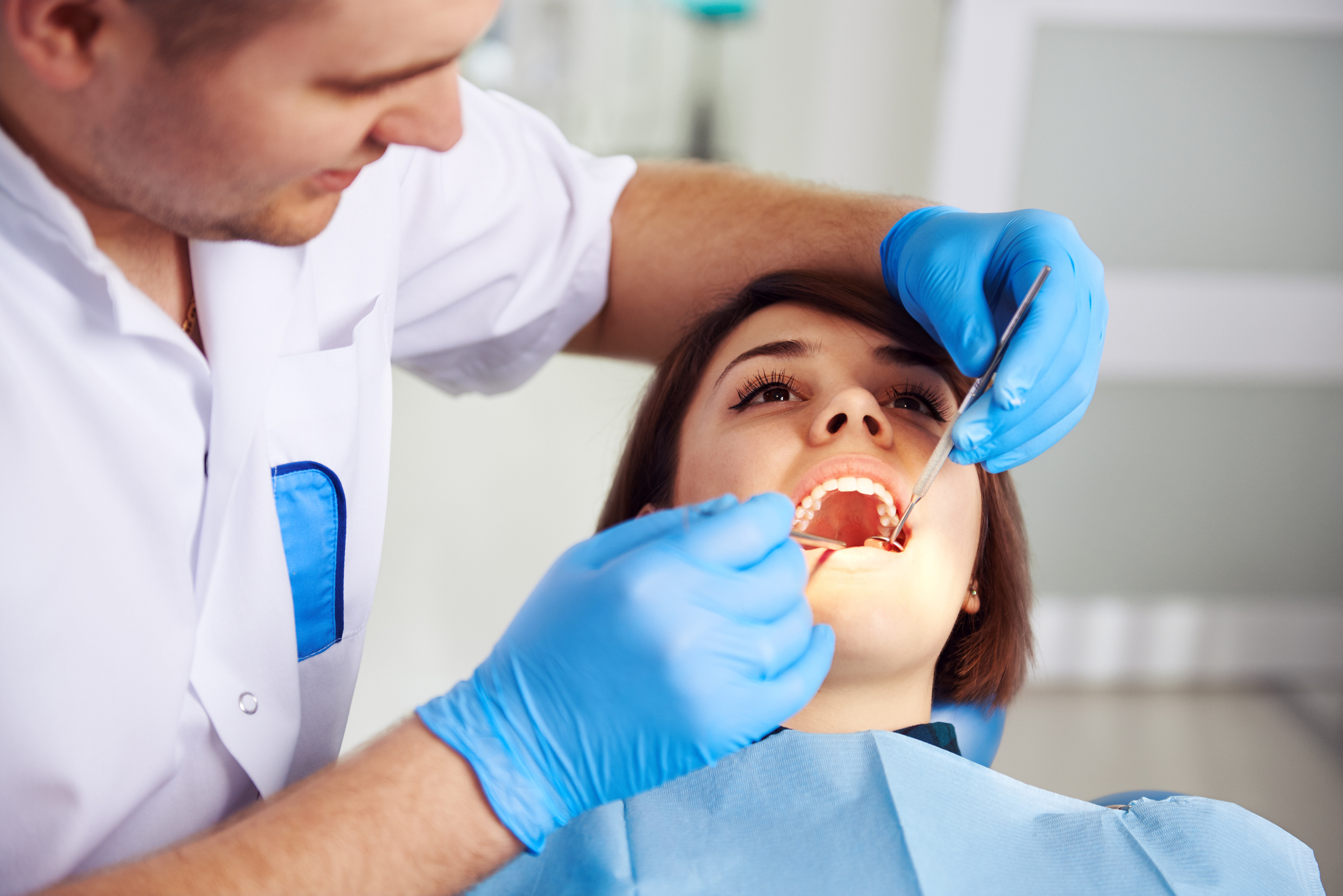
Utilizing sedation for patients receiving dental crowns is a clinical protocol at St. Matthews Family Dental that uses nitrous oxide or oral sedatives to relax patients during restorative appointments. This approach eliminates the stress of tooth preparation, manages jaw fatigue, and allows Dr. Nikki Bevilacqua to complete multiple crowns in a single, high-efficiency visit.
While traditional anesthesia numbs the tooth, the sedative cannot stop the sensation of bone-conducted vibration from the dental drill. For many anxious patients in Louisville, this vibration is a primary trigger for dental phobia. Sedation dentistry at our Thierman Lane office works by raising your sensory threshold. When our team uses nitrous oxide or oral conscious sedation during crown preparation, the buzzing sensation and high-pitched equipment sounds feel muffled and distant. This psychological buffering ensures that your nervous system does not remain in a state of high alert, preventing the sensory overload that often leads to treatment exhaustion.
A precision-crafted Zirconia or E-Max crown requires meticulous tooth shaping, which means the patient must keep their mouth open for a longer duration than a standard filling. For locals or elderly patients, this can lead to guarding, in which the jaw and neck muscles become dangerously tense. Sedation serves as a musculoskeletal relaxant, allowing your jaw to remain in a natural, unstressed position without conscious effort. By preventing this physical tension, patients at St. Matthews Family Dental report significantly less post-operative jaw soreness and tension headaches the evening after their procedure.
Many residents near the Shelbyville Road corridor avoid restorative work because of a traumatic past experience with crowns or large fillings. This creates a neurological loop where the sound of a dental office triggers a cortisol spike. Clinical research supports that conditions and patient presentations may require pharmacological intervention [1] (Yang et al., 2024). We utilize oral conscious sedation to reset this cycle. Because oral sedatives like Midazolam have anterograde amnestic properties, your brain effectively stops recording the details of the appointment. Medical literature supports that Midazolam is commonly used to induce moderate sedation and is very safe [2] (Corcuera-Flores et al., 2016). By removing the memory of the drill’s sound and the clinical environment, we prevent the reinforcement of dental anxiety. You wake up from your restorative visit with a new crown and no new dental trauma to carry forward.
Comparing crown experiences
Feature | Traditional crown prep | Sedated crown prep |
Sensory input | Full awareness | Sensory triggers |
Jaw fatigue | High | Minimum |
Time perception | Feels long | Fells short |
Efficiency | One tooth per visit, usually | Can prep multiple teeth |
Recovery | Immediate | Immediate |
For patients, the stressful part of a crown is often the scheduling. Navigating Louisville traffic to visit a dentist multiple times for separate crowns is inefficient. Sedation dentistry allows Dr. Nikki Bevilacqua to place multiple crowns at once. Because you are perfectly comfortable and still, we can prepare two or even three crowns in a single morning session. This strategy maximizes your time, requiring only one recovery period and one driver. This is an effective logistical solution for professionals who need to maintain a high-end smile without sacrificing multiple days of their work week.
The transition from the clinical chair to your home in St. Matthews is critical for long-term comfort. When a patient undergoes a crown prep under high stress, their body is flooded with adrenaline, which can make the initial hours of recovery feel jarring. Sedation acts as a physiological buffer, tapering off slowly as you return home. This controlled descent from the procedure ensures your blood pressure remains stable, which is vital for the health of the gum tissue surrounding your new temporary crown. By the time the sedative fully clears your system, you are already resting comfortably on your couch, having bypassed the adrenaline spike associated with traditional dental visits.
Absolutely. In fact, this is the preferred method for our patients in Louisville. Sedation allows you to remain comfortable for a longer duration, enabling Dr. Bevilacqua to prep multiple teeth in one morning, saving you a second commute through Watterson Expressway traffic.
Yes. With both Nitrous Oxide and Oral Conscious Sedation, you are in a state of “conscious sedation.” You can hear and respond to Dr. Bevilacqua’s instructions, but you will feel completely unbothered by the sights and sounds of the equipment.
Yes. Much of the post-operative soreness from a crown comes from “guarding” the act of tensing your jaw and neck muscles during the procedure. Sedation promotes musculoskeletal relaxation, which typically results in less jaw fatigue the following day.
[1] Yang, Ruijia, et al. “Modern Sedative Agents and Techniques Used in Dentistry for Patients with Special Needs: A Review.” Journal of Taibah University Medical Sciences, vol. 19, no. 1, Feb. 2024, pp. 153–63. DOI.org (Crossref), https://doi.org/10.1016/j.jtumed.2023.10.004.
[2] Corcuera-Flores, J. R., Silvestre-Rangil, J., Cutando-Soriano, A., & López-Jiménez, J. (2016). Current methods of sedation in dental patients – a systematic review of the literature. Medicina oral, patologia oral y cirugia bucal, 21(5), e579–e586. https://doi.org/10.4317/medoral.20981