
Laughing gas, or inhaled nitrous oxide, is a highly safe and clinically proven mild sedative used in pediatric dentistry. St. Matthews Family Dental uses this to instantly reduce anxiety and elevate the pain threshold without putting children to sleep. Because the gas is not metabolized and is rapidly eliminated with pure oxygen, there are no lingering side effects.
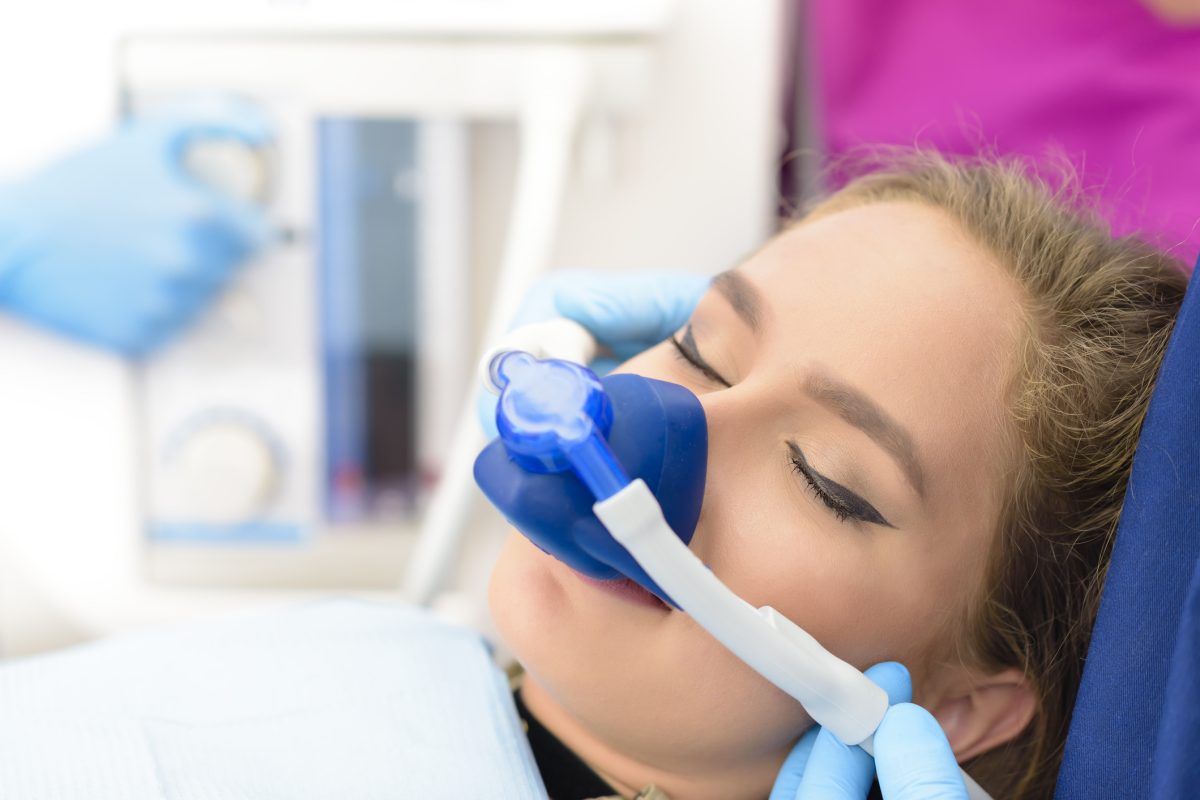
Because laughing gas provides conscious sedation, your child does not lose control of their body or their awareness. Instead, it creates a deeply calming, sensory-shifting experience. Within two to three minutes of breathing the sweet-smelling air through their “astronaut mask,” your child will likely feel a warm, tingling sensation in their fingers and toes. Many children describe feeling like they are floating or wrapped in a heavy, cozy blanket. The gas induces a state of mild euphoria, which is exactly how it earned the name “laughing gas.” While they rest in the chair, the bright clinical lights and the humming sounds of the dental tools will feel distant and unimportant. They will be perfectly content to zone out.
Medical literature supports that the Tell-Show-Do approach is more effective than the ask-tell-ask approach in alleviating dental anxiety in children [1] (Elicherla et al., 2024). Pharmacological safety is only one half of the equation; behavioral psychology is the other. Laughing gas is a fantastic tool for lowering a child’s initial anxiety. Once the nitrous oxide has relaxed your child’s nervous system, the doctor utilizes a proven pediatric protocol called “Tell-Show-Do.”
Tell: She explains the procedure using kid-friendly, non-threatening language. A drill becomes a “sugar bug sweeper,” and the suction becomes a “thirsty straw.”
Show: She demonstrates how the tool works in a safe space, such as lightly running the polisher over the back of your child’s hand so they can feel the gentle vibration.
Do: Only after the child understands and agrees does she move to the actual tooth.
By pairing the physical relaxation of laughing gas with this psychological transparency, we completely remove the fear of the unknown.
For children with ADHD, mild autism, or general sensory processing sensitivities, a standard dental office can feel like a minefield. The high-pitched whir of the instruments, the bright LED lights, and the unusual textures of dental gloves can cause immediate sensory overload.
For these families, laughing gas is a clinical game-changer. Nitrous oxide acts as a powerful sensory buffer. It physically dulls the body’s response to external stimuli, essentially turning down the volume on the clinic’s sights, sounds, and smells. When a child is not actively fighting a sensory overload, they are much less likely to squirm or panic. This allows dentists to work safely and efficiently, transforming a potentially overwhelming appointment into a calm, manageable, and successful wellness visit.
Table that compares pediatric calming methods
Calming method | Safety profile | Trauma prevention level | Recovery time | Cost range |
Nitrous oxide | Very high | Maximum | 0 minutes | Low-moderate |
Local anesthetic | High | Low | 1-2hours of numbness | Included in the procedure |
Orla’s conscious sedation | High | Moderate | 12-24 hours | Moderate |
IV sedation | Oversight ended | High | 24+ hours | High |
As a parent, your words carry weight. How you frame the upcoming appointment can significantly affect the effectiveness of the laughing gas. Children are highly perceptive and can easily pick up on a parent’s own dental anxiety. To set your child up for success, we recommend a “positive framing” strategy. Avoid trigger words like needle, shot, drill, or pain. Tell your child that they are going to see the dentist to get a “superhero smile.” You can say that if they feel nervous, the doctor has a special “magic breathing mask” that smells like fruit and makes their body feel relaxed and giggly. By keeping the conversation light, positive, and focused on the fun aspects of the visit, you prime their brain to accept the relaxing benefits of the nitrous oxide without resistance.
Clinical evidence suggests that the etiology of dental fear, anxiety, or phobia is complex and multifactorial [2] (Beaton et al., 2014). From a financial and wellness perspective, pediatric laughing gas is one of the smartest investments a parent can make. From a financial and wellness perspective, pediatric laughing gas is one of the smartest investments a parent can make. Why? Because the most expensive dental bill is always the one caused by avoidance. When a child experiences a painful or scary filling without the proper calming support, they often grow into adults who suffer from severe dental phobia. This fear leads to skipped cleanings in their 20s and 30s, allowing tiny, inexpensive cavities to develop into massive infections that require thousands of dollars in root canal therapy, crowns, or dental implants. By using nitrous oxide today, the dentist helps your child build a positive, fear-free association with oral healthcare. You are not just paying for a comfortable filling this afternoon, you are protecting them from the costly, painful cycle of dental neglect for the rest of their lives.
Yes, but keep it light. We recommend a small, easily digestible snack (such as toast or a banana) about 2 hours before your visit. A very full stomach can occasionally cause slight nausea when mixed with the gas.
No. Your child will remain 100% awake, conscious, and able to talk to you and the dentist throughout the procedure. They will simply feel incredibly relaxed, giggly, and unbothered by the dental work.
Zero minutes post-appointment. Once the procedure is done, the dentist flushes the mask with 100% pure oxygen for five minutes. This completely clears the gas from their lungs, allowing them to safely head back to class at nearby schools.
[1] Elicherla, N. R., Saikiran, K. V., Anchala, K., Elicherla, S. R., & Nuvvula, S. (2024). Evaluation of the effectiveness of tell-show-do and ask-tell-ask in the management of dental fear and anxiety: a double-blinded randomized control trial. Journal of dental anesthesia and pain medicine, 24(1), 57–65. https://doi.org/10.17245/jdapm.2024.24.1.57
[2] Beaton, L., Freeman, R., & Humphris, G. (2014). Why are people afraid of the dentist? Observations and explanations. Medical principles and practice : international journal of the Kuwait University, Health Science Centre, 23(4), 295–301. https://doi.org/10.1159/000357223