
Liberty Dental coverage for pediatric sealants typically provides 100% reimbursement for protective resin coatings (ADA code D1351) applied to a child’s permanent molars. At St. Matthews Family Dental, we help Louisville families maximize these pediatric benefits alongside adult periodontal maintenance protocols to ensure comprehensive, affordable oral healthcare for the entire household.
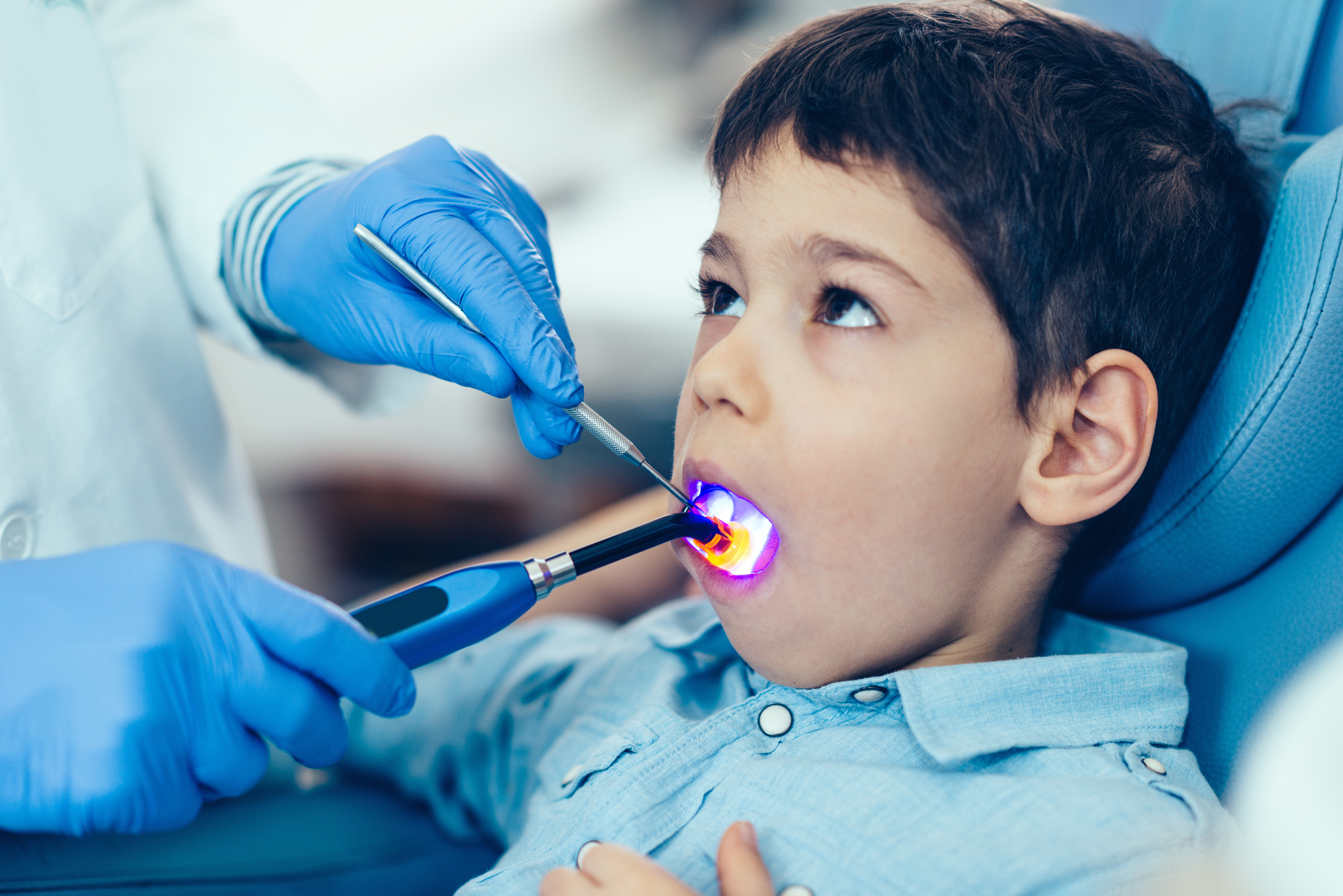
Medical literature supports that sealant treatment is effective at reducing dental caries [1] (Canga et al., 2021). The greatest benefit of a pediatric dental sealant is that the application process is 100% needle-free and drill-free. The procedure is fast, quiet, and completely painless. First, our hygienist gently cleans and dries your child’s molar. Next, we apply a mild conditioning gel to slightly texturize the enamel and ensure a strong bond. Finally, we paint the liquid resin directly onto the chewing surface and instantly harden it with a specialized blue curing light. The entire process takes less than 60 seconds per tooth. Your child can simply lie back, watch their favorite show on our ceiling monitors, and leave our St. Matthews clinic without any lingering numbness in their lips or cheeks.
A common question parents ask is, “How long does my child have to wait to eat after getting sealants?” Because we use a high-tech curing light, the sealant resin hardens instantly. This means your child can safely eat and drink as soon as they leave the office. However, to ensure the sealants last for years, you should monitor sticky foods. Extremely sticky candies can grip the resin and prematurely pull the sealant out of the tooth’s grooves. Crunchy snacks, apples, and standard meals are perfectly fine. By limiting ultra-sticky sweets, you protect the sealant’s bond and keep your child’s Liberty Dental benefits working hard for their long-term oral health.
Sealants are the ultimate defense for children between the ages of six and twelve, but they are just one phase of your child’s dental journey. As your child’s permanent molars are protected, our focus gradually expands to their bite alignment. Around age seven, dentists begin evaluating your child’s jaw growth and airway development during their routine exams. While your Liberty Dental plan covers the preventive sealants, we use these same visits to look for early signs of crowding or an overbite. Clinical literature supports that early short-term orthodontic treatment with simple appliances, in the deciduous or early mixed dentition phase, can correct certain malocclusions [2] (Schneider-Moser et al., 2022). Catching these structural issues early often allows us to use phased orthodontic intervention. This proactive approach can prevent the need for complex, expensive adult braces later, ensuring your child’s transition to middle school at nearby St. Matthews schools is accompanied by a healthy, confident smile.
Table that compares family maintenance and pricing comparison
Feature | Standard prophylaxis | Periodontal maintenance |
Primary goal | Prevention for healthy gums | Active infection management |
Liberty coverage | Typically 100% | Typically 50-80% |
Estimated out-of-pocket | $0 | Small copay |
Frequency needed | 6 months | 3-4 months |
Self-pay | Standard member rate | Discounted member rate |
If you are an adult managing gum disease, you might wonder why your Liberty Dental plan only covers two periodontal maintenance (D4910) visits per year, even though your dentist recommends four. The disconnect lies between insurance business models and actual human biology. Clinical microbiology shows that the destructive bacteria responsible for gum disease repopulate and reach dangerous levels every 90 days. To keep your gums healthy and prevent bone loss, you must disrupt this bacteria every three months. Liberty Dental’s coverage limits are based on standard financial contracts, not your specific medical reality.
Managing a household budget means making every dollar stretch. If your employer provides a Flexible Spending Account (FSA) or Health Savings Account (HSA), you can “stack” these tax-advantaged funds alongside your Liberty Dental plan. Because Liberty Dental often requires copays for adult therapeutic cleanings or upgraded tooth-colored fillings, you can use your FSA card to pay that remaining balance. This effectively gives you a 20% to 30% discount on your out-of-pocket costs, depending on your tax bracket. Our administrative team specializes in benefit coordination. We will provide the exact itemized digital receipts you need to ensure your FSA administrator instantly approves the expense, making world-class family dental care surprisingly affordable.
Most Liberty Dental plans restrict sealant coverage to permanent (adult) molars, which typically erupt at ages 6 and 12. However, our team can verify your specific group ID to determine whether exceptions apply to high-risk baby teeth.
With proper brushing and a healthy diet, dental sealants can last anywhere from 5 to 10 years.
Absolutely. If you exhaust your Liberty Dental annual maximum, you can seamlessly utilize our internal savings plan to receive significant discounts on any remaining periodontal maintenance or restorative work you need before the end of the year.
[1] Canga, M., Malagnino, G., Malagnino, V. A., & Malagnino, I. (2021). Effectiveness of Sealants Treatment in Permanent Molars: A Longitudinal Study. International journal of clinical pediatric dentistry, 14(1), 41–45. https://doi.org/10.5005/jp-journals-10005-1878https://doi.org/10.5005/jp-journals-10005-1878
[2] Schneider-Moser, U. E. M., & Moser, L. (2022). Very early orthodontic treatment: when, why and how?. Dental press journal of orthodontics, 27(2), e22spe2. https://doi.org/10.1590/2177-6709.27.2.e22spe2