
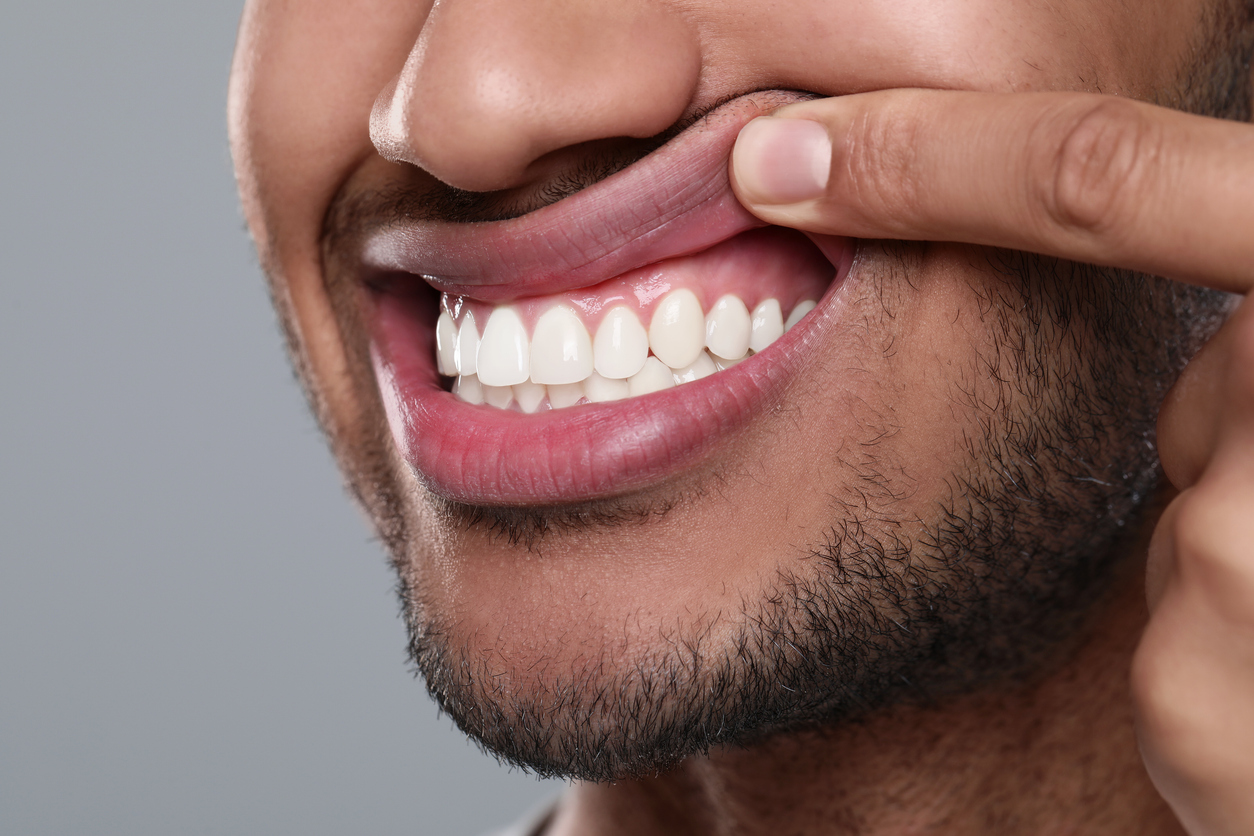
Vaping-induced periodontal disease is a form of gum tissue destruction caused by the heat, nicotine, and chemicals in e-cigarettes. These elements can restrict blood flow and dry out the mouth, increasing bacterial growth and leading to severe gum recession and potential tooth loss in young adults.
E-cigarettes rely on heating coils to turn liquid into a chemical vapor. This process introduces unnatural, localized heat into your mouth when you inhale. Medical literature supports that vaping may be linked to increased rates of periodontitis as well as an increased risk of developing a carious pathology [1] (Iacob et al., 2024). Constant exposure to this temperature can cause thermal stress on your gum tissue. Over time, this recurring heat can weaken your gums. When the tissue is physically stressed by heat, it loses its elasticity and defensive properties, making it easier for bacteria to invade the gum pockets and accelerate the recession process.
As the chemicals and nicotine in e-cigarettes cause your gums to pull away, they leave the lower portion of your tooth vulnerable. Unlike the top of your tooth, the root is not protected by hard, durable enamel. Instead, it is covered by a softer layer containing thousands of microscopic nerve pathways. When your gums recede and expose these roots, everyday activities become painful. A sip of cold water after a workout at Seneca Park or a hot cup of coffee will send a sharp, shooting zap directly to the tooth’s nerve. Treating the underlying gum disease is the most effective way to stop this frustrating sensitivity and protect the root from permanent decay.
Many young professionals in Louisville want to perfect their image using clear aligners. However, vaping while undergoing orthodontic treatment creates a highly toxic micro-environment for your smile. Clear plastic aligners sit flush against your teeth. When you inhale a vape, the sweet, acidic aerosol seeps under the trays and becomes trapped against your enamel and gumline for hours. Because your saliva cannot reach under the aligner to wash the chemicals away, the rate of tooth decay and gum inflammation skyrockets. Clinical literature indicates that smoke exposure compromises aligner integrity and favors microbial colonization [2] (Gallisteu-Luiz et al., 2026). If you are investing in a smile makeover at St. Matthews Family Dental, protecting your gums from trapped vaping chemicals is a mandatory step for success.
Comparing Vaping, Smoking, and Healthy Mouths
Oral Environment | Plaque Buildup Rate | Gum Recession Risk | Oral Moisture Level | Estimated Remediation Needs |
Healthy Mouth | Normal | Low | High (Protective) | Biannual Standard Cleanings |
Traditional Smoking | Very High | Very High | Low (Dry) | Deep Scaling & Root Planing |
Daily Vaping | High | High | Very Low (Severe Dry Mouth) | Periodontal Therapy & Maintenance |
“Vaper’s tongue” is a common clinical side effect where the artificial flavorings and chemicals in e-liquids coat the tongue and temporarily numb your taste buds. Beyond the loss of taste, vaping is a leading cause of chronic bad breath (halitosis) in young adults. The severe dry mouth caused by propylene glycol prevents your body from naturally washing away dead oral cells. Medical literature suggests that vaping may increase the risk of dental caries due to alterations in the normal oral flora and the growth of cariogenic bacteria [3] (Tabnjh et al., 2025). As bacteria break down these trapped cells, they release sulfur compounds. No amount of chewing gum or drugstore mouthwash will mask this odor.
If you currently vape or are actively trying to quit, you must adopt a strict daily defense routine to minimize the damage to your smile. First, drastically increase your daily water intake to combat chemical-induced dry mouth. Second, switch to a soft-bristled electric toothbrush; hard brushing on already weakened gums will only make the recession worse. Finally, you cannot skip your dental checkups. At St. Matthews Family Dental, our team can monitor your gum attachment closely. By catching the early signs of tissue loss, we can intervene with targeted, comfortable treatments.
Yes. Even without nicotine, e-cigarette liquids contain propylene glycol and flavorings. These ingredients cause severe dry mouth and alter your oral microbiome, which leads directly to plaque buildup, gum inflammation, and eventual recession.
Gum tissue cannot regenerate or grow back on its own once it has receded.
Yes. Vaping leaves very specific clinical clues in the mouth, such as severe localized dry tissue, lack of natural bleeding during an exam, and specific patterns of plaque buildup near the front teeth. We encourage absolute honesty so we can tailor your care plan without any judgment.
[1] Iacob, A. M., Escobedo Martínez, M. F., Barbeito Castro, E., Junquera Olay, S., Olay García, S., & Junquera Gutiérrez, L. M. (2024). Effects of Vape Use on Oral Health: A Review of the Literature. Medicina (Kaunas, Lithuania), 60(3), 365. https://doi.org/10.3390/medicina60030365
[2] Galisteu-Luiz, K., de Mendonça Copello, F., Lorene de França Leite, K., da Rocha Cavalcante, M., Ferreira Lira, L., Santos Silva, K., Pereira Martins, S., Cristina Pinto da Costa, I., Drago Vidal, G., Nelson Elias, C., Schubach da Costa Barreto, L., & Maria Gomes de Souza, M. (2026). Effect of cigarette smoke on surface roughness and bacterial adhesion of orthodontic aligners: an in vitro investigation. Clinical oral investigations, 30(1), 55. https://doi.org/10.1007/s00784-025-06720-8
[3] Tabnjh, A. K., Alizadehgharib, S., Campus, G., & Lingström, P. (2025). The effects of electronic smoking on dental caries and proinflammatory markers: a systematic review and meta-analysis. Frontiers in oral health, 6, 1569806. https://doi.org/10.3389/froh.2025.1569806