
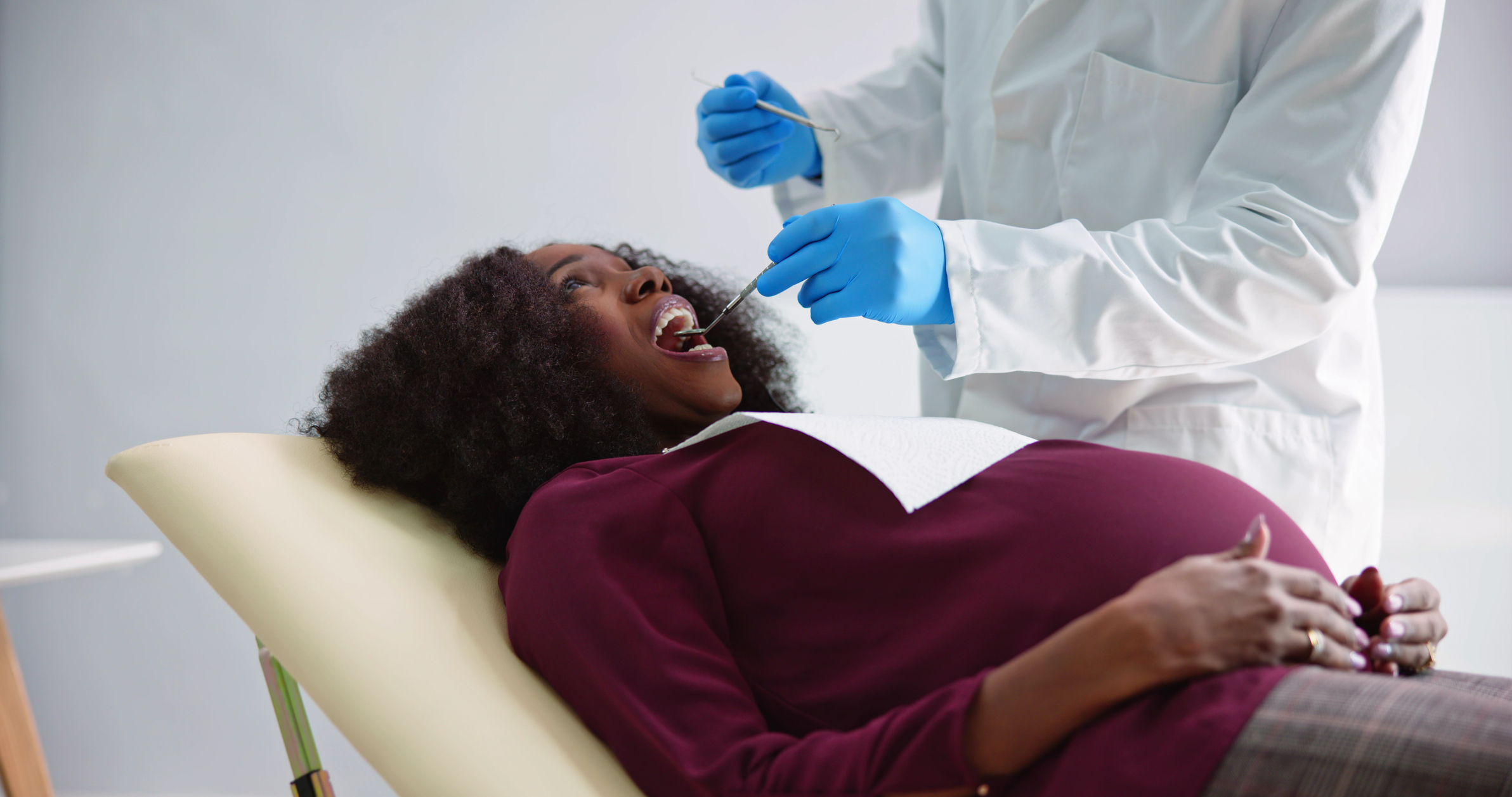
Dental lidocaine is an FDA Category B local anesthetic, meaning it is clinically safe for use during pregnancy. When administered in standard dental doses during the second trimester (months 4 through 6), it effectively numbs the tooth without posing risks to fetal development or maternal health.
Most dental lidocaine contains a tiny amount of epinephrine, which is a synthetic form of adrenaline. Many expecting mothers worry that this adrenaline will speed up their baby’s heart rate. Fortunately, this specific mixture is actually a safety benefit. Epinephrine works as a vasoconstrictor. Medical literature supports that epinephrine acts as a highly effective local vasoconstrictor by targeting α1-adrenergic receptors in small blood vessels of the oral mucosa [1] (Saraga et al., 2025). It temporarily shrinks the blood vessels right around your tooth. This keeps the lidocaine trapped in that specific area so the numbness lasts longer. Because the medication stays locked in your jaw, less of it enters your general bloodstream. This prevents the medication from crossing the placenta. The American Dental Association confirms that the standard dose of epinephrine used in routine fillings is perfectly safe for a healthy pregnancy.
The localized numbness from your filling will naturally fade within two to three hours. Once you leave St. Matthews Family Dental and the lidocaine wears off, you might feel mild soreness around your gums. Managing this post-procedure discomfort requires the right at-home strategy. During your second trimester, you must be careful with over-the-counter pain relievers. Acetaminophen (Tylenol) is universally recognized by doctors as the safest option for dental pain during pregnancy. Clinical evidence suggests that Acetaminophen is the only analgesic considered safe for use throughout pregnancy [2] (Woodbury et al., 2024). You must strictly avoid NSAIDs like ibuprofen (Advil or Motrin) and aspirin, as these can cause serious complications for fetal development, especially as you get closer to your third trimester. We will provide clear, written instructions on exactly what you can safely take when you head back home.
Comparing Your Options During Pregnancy
Treatment Strategy | Maternal / Fetal Risk Level | Cost Impact | Maintenance Level |
Lidocaine in 2nd Trimester | Very Low (FDA Category B) | Standard Filling Cost | Low (Issue resolved) |
Delaying Until Postpartum | High (Infection can spread) | High (Requires root canal/crown) | High (Daily pain management) |
At-Home Numbing Gels | Moderate (Ingestion risk) | Low | Temporary / Daily |
Clinical evidence indicates that if properly performed, the amount of ionizing radiation produced during dental radiographic procedures is so low that it is unlikely to reach the teratogenic threshold [3] (Flagler et al., 2022). Before we can administer lidocaine to fix your toothache, we have to see exactly what is causing the pain. For many moms-to-be, the thought of a dental X-ray is just as scary as the needle. However, modern diagnostic technology is remarkably safe. We use high-speed digital X-ray sensors that require a fraction of the radiation used by old-fashioned film. To guarantee your baby’s safety, we cover your chest and abdomen with a heavy, lead-lined apron equipped with a thyroid collar. The radiation is highly targeted to your mouth, meaning the exposure to your baby is virtually zero. You can get the accurate diagnosis you need without putting your pregnancy at risk.
At six months pregnant, lying flat on your back to sleep can be uncomfortable. The same rule applies to the dental chair. When you lie completely flat, the weight of your uterus can increase pressure on the inferior vena cava. This is the major vein that carries blood from your lower body back to your heart. Pressure on this vein can cause a sudden drop in your blood pressure, leaving you feeling dizzy, nauseous, or out of breath. Our Louisville team understands this biological shift. We keep the dental chair in a semi-reclined, elevated position. We also encourage you to shift your hips to the left side or use a small pillow for support, ensuring your circulation remains strong and steady throughout the procedure.
Your health is an interconnected system, and we believe in a team approach to your care. If you are experiencing a high-risk pregnancy, we never make assumptions about your safety. Before administering lidocaine or performing any restorative work, we gladly coordinate with your primary medical team. Whether you see an obstetrician here in Louisville, we will share your digital X-rays and our proposed treatment plan. We routinely request written medical clearance from your OB-GYN before we begin. This collaborative step ensures your dental care aligns with your specific pregnancy needs, giving you total peace of mind.
No. Standard lidocaine used for dental fillings does not elevate fetal heart rates. If your dentist uses lidocaine with a tiny amount of epinephrine to make the numbness last longer, the dose is so small that it is processed locally and is considered clinically safe for expecting mothers.
Yes. If a tooth is severely infected or fractured beyond repair, leaving it in your mouth is far more dangerous than removing it. We can safely extract the tooth using localized lidocaine during your second trimester to prevent the infection from spreading.
While lidocaine is perfectly safe, nitrous oxide (laughing gas) is generally avoided during pregnancy. We rely strictly on localized anesthetics for expecting mothers to ensure zero respiratory risks to you or your baby.
[1] Saraga, M. A., Fotopoulos, I., Zisis, V., Poulopoulos, A., Dabarakis, N., & Lillis, T. (2025). Pharmacological Interactions of Epinephrine at Concentrations Used in Dental Anesthesiology: An Updated Narrative Review. Reports (MDPI), 8(4), 224. https://doi.org/10.3390/reports8040224
[2] Woodbury, M. L., Cintora, P., Ng, S., Hadley, P. A., & Schantz, S. L. (2024). Examining the relationship of acetaminophen use during pregnancy with early language development in children. Pediatric research, 95(7), 1883–1896. https://doi.org/10.1038/s41390-023-02924-4
[3] Flagler CK, Troici CM, Rathore SA. A historical review of the effects of dental radiography on pregnant patients. J Am Dent Assoc. 2022;153(10):989-995. doi:10.1016/j.adaj.2022.06.006