
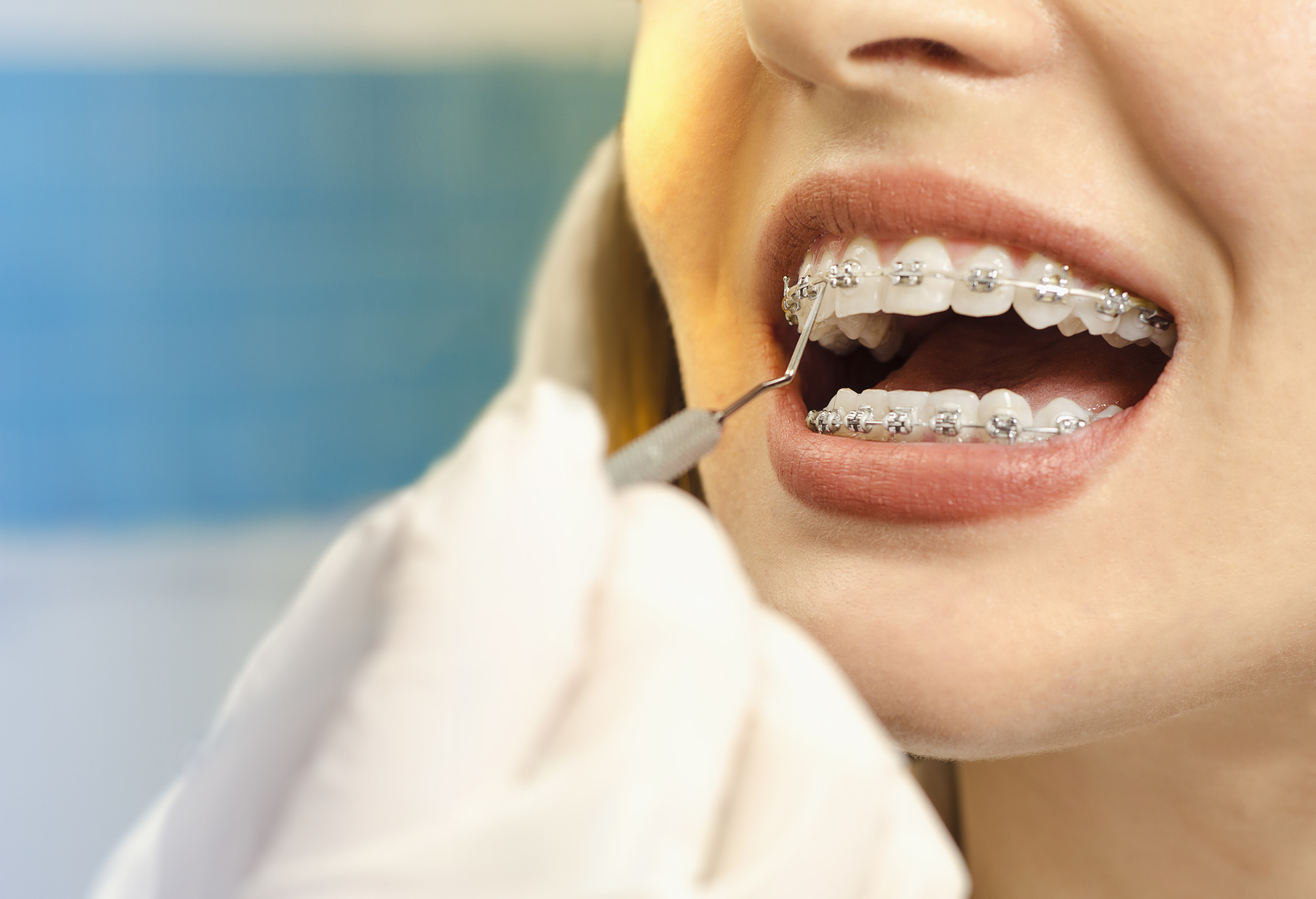
UnitedHealthcare (UHC) dental coverage for adult orthodontics depends on your specific employer-sponsored plan. While many standard UHC plans restrict orthodontic benefits to dependents, premium plans or specific “orthodontic riders” may cover a percentage of adult braces or Invisalign up to a predetermined lifetime maximum.
Medical literature supports the diversity of factors identified, highlighting the complex interplay among the dental profession, care funders, society, and individual patients in understanding medically necessary orthodontic treatment [1] (Richmond et al., 2026). A major area of confusion for adults is how UHC decides to approve an orthodontic claim. UHC often draws a line between cosmetic alterations and medically necessary alignment. If you simply want to close a small gap between your front teeth, UHC may deny the claim as purely cosmetic. However, if your misaligned bite is causing severe jaw pain, premature enamel wear, or chewing difficulties, it shifts into the medical necessity category. At St. Matthews Family Dental, we do not just tell UHC that you need clear aligners; we prove it. Using our high-speed digital intraoral scanners, we capture 3D maps of your bite. We send this high-definition visual evidence directly to UHC’s claims department to prove your orthodontic treatment is structurally necessary, significantly increasing your chances of approval.
If you recently relocated or landed a new job at a major local employer, your insurance may have changed right in the middle of your orthodontic treatment. In the dental insurance world, this is called a “Work-in-Progress” (WIP) claim. Fortunately, if your new UHC plan includes an adult orthodontic rider, it will often pick up the remaining balance. The administrative teams will submit your original “banding date” (the day your treatment started) and your total treatment time to UHC. UHC will then pro-rate your remaining coverage, allowing you to transition your care.
Before you can start your journey with clear aligners or traditional brackets, your teeth and gums must be 100% healthy. Moving teeth that have active decay or gum inflammation can lead to serious structural damage. This means you may need a few fillings or a deep cleaning before your orthodontic scan. This is where understanding your UHC plan becomes a huge financial advantage. Pre-orthodontic prep work falls under your Annual Maximum, not your Orthodontic Lifetime Maximum. By using your standard UHC restorative benefits to cover any necessary tooth-colored fillings or cleanings, you protect your orthodontic funds.
Table that compares orthodontic options
Feature | Clear aligners | Traditional braces | UHC coverage classification |
Aesthetic impact | Nearly invisible | Highly visible | Viewed equally |
Estimated cost | Up to $6,000 | Up to $6,000 | Lifetime maximum |
Maintenance level | Removable for easy brushing | Specialized flossing | N/A |
Dietary restrictions | None | Avoid hard, sticky foods | N/A |
Treatment time | 6-18 months | 12-24 months | Paid out over the course of treatment |
The day your braces come off is a huge milestone. To keep your teeth from shifting back, you must wear a retainer. A common question we hear from patients is: Will UHC pay for my retainers? In most cases, the cost of your very first set of retainers is bundled into the “Comprehensive Orthodontic Treatment” code (ADA code D8090). This means your UHC lifetime maximum covers them. UHC states that under major services, it can include retainers and root canals [2] (UHC, n.d.). However, if you accidentally throw your retainer away on a lunch break, UHC will rarely cover a replacement. Because replacement retainers are usually an out-of-pocket expense, we highly recommend keeping them in a hard, brightly colored case whenever they are not in your mouth.
Even with a great UHC orthodontic rider, you will likely have an out-of-pocket balance. If your UHC lifetime maximum is $1,500 and your clear aligner treatment is $4,500, you have a $3,000 gap. For professionals, stacking your benefits with a Flexible Spending Account (FSA) is an effective financial strategy. Because orthodontics is a qualified medical expense, you can use pre-tax FSA dollars to pay for that $3,000 gap. Even better, our team specializes in “Benefit Phasing.” If you start your clear aligner treatment in November, you can use the remaining balance of your current year’s FSA to cover the down payment. Then, when your FSA funds reload in January, you can use the new year’s funds to pay off the rest. This strategic timing allows you to use two years’ worth of tax-free money to fund a single, flawless smile.
If your UHC plan includes adult orthodontic benefits, they generally do not classify clear aligners as purely “cosmetic.” UHC usually views Invisalign and traditional braces as equivalent orthodontic treatments, applying the same 50% coverage rate and lifetime maximum to both options.
Orthodontic insurance payments are typically made in monthly or quarterly installments, not as a single lump sum. If you lose or change your UHC coverage mid-treatment, UHC will stop making payments.
No. This is a common point of confusion. Your UHC annual maximum (which covers cleanings, fillings, and crowns) is entirely separate from your Orthodontic Lifetime Maximum.
[1] Richmond, D., Benzian, H., Daskalogiannakis, J., Holden, A., & Quiñonez, C. (2026). The Medical Necessity of Orthodontic Care: A Qualitative Study. JDR clinical and translational research, 11(2), 159–167. https://doi.org/10.1177/23800844251355270
[2] UHC. (n.d.). Dental insurance plans for individuals. Www.uhc.com. https://www.uhc.com/dental-vision-supplemental-plans/dental-insurance