
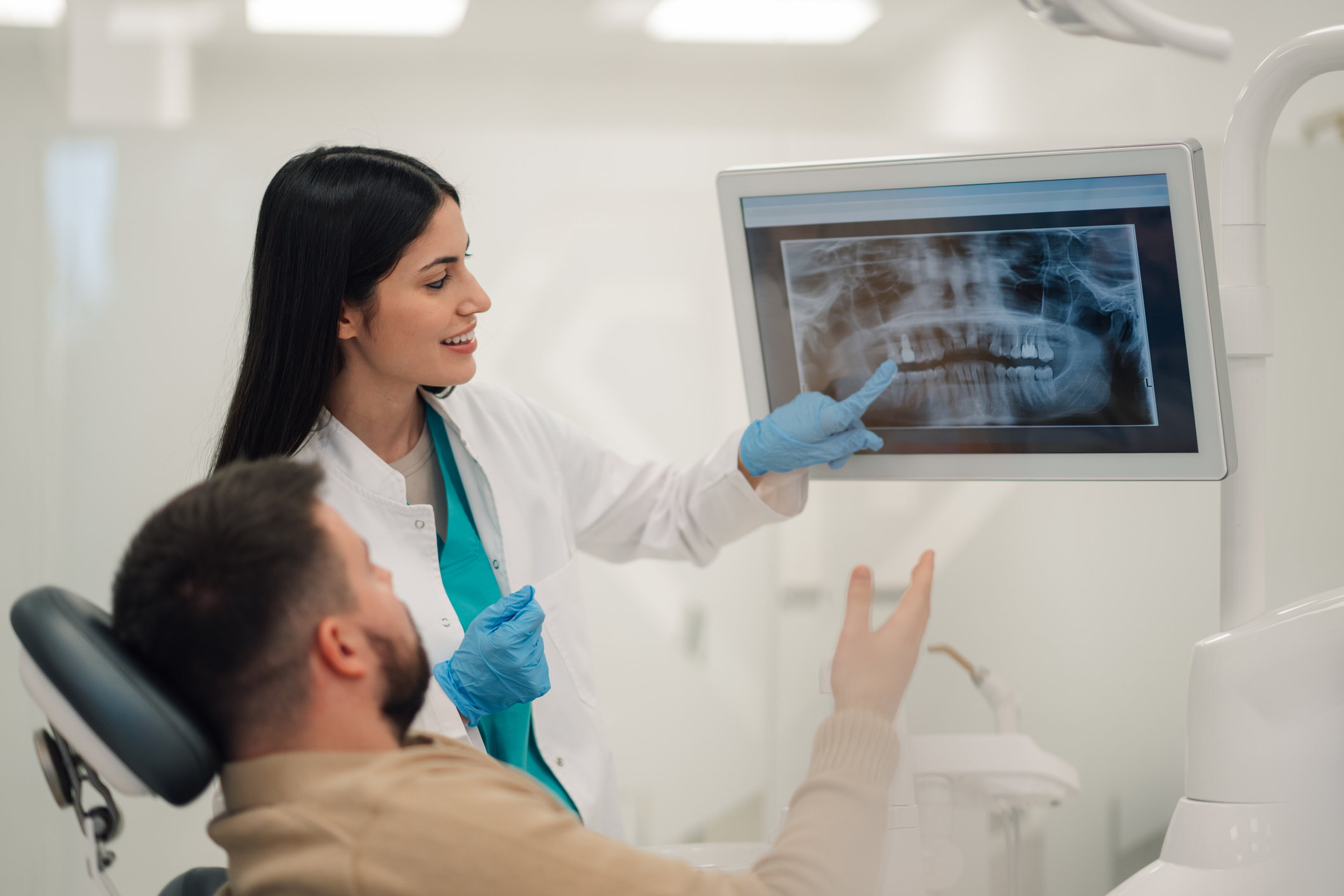
The American Dental Association recommends visiting the dentist every six months for a routine exam and standard cleaning. This biannual schedule is a clinically proven strategy to disrupt bacterial biofilm, prevent tartar calcification, detect microscopic decay early, and fully maximize your preventive dental insurance benefits.The American Dental Association recommends visiting the dentist every six months for a routine exam and standard cleaning. This biannual schedule is a clinically proven strategy to disrupt bacterial biofilm, prevent tartar calcification, detect microscopic decay early, and fully maximize your preventive dental insurance benefits.
If you are expecting a new addition to your family, your biological timeline for dental visits needs an immediate update. During pregnancy, elevations in various hormones change the way your body reacts to oral bacteria. This can trigger “pregnancy gingivitis,” a condition where even a small amount of plaque causes your gums to swell, bleed, and become highly sensitive. Because of this heightened risk, the standard 6-month rule is often not enough. Dr. Nikki Bevilacqua typically recommends adding an extra professional cleaning during your second or third trimester. For parents managing a growing household budget, there is good news: major insurance providers like MetLife and Cigna frequently offer a “Maternity Benefit” that covers the third cleaning at 100%. By adjusting your visit frequency during pregnancy, you protect your own systemic health and lower inflammatory markers, which is clinically proven to support a safer, healthier delivery.
If you are a professional currently straightening your smile with clear aligners, your daily oral environment has changed. Medical literature suggests that Invisalign aligners should be worn 20-22 hours per day and changed every 7 days [1] (Al-Nadawi et al., 2021). When you wear clear aligners for the recommended 22 hours a day, your teeth are encased in plastic. This restricts the natural flow of your saliva, which is your body’s primary defense for washing away food particles and neutralizing cavity-causing acids. Because your teeth are trapped in this micro-environment, plaque calcifies much faster. While you are undergoing orthodontic treatment, the dentist may recommend shortening your hygiene interval to every 4 months. These extra touch-up cleanings ensure that decay does not form around your orthodontic attachments. Maintaining a slightly tighter visit schedule guarantees that when your aligner treatment is finished, your newly straightened teeth are structurally flawless and stain-free.
Clinical literature supports that diabetes mellitus can affect oral health, and there is a bidirectional relationship between glycemic control and oral health status [2] (Alqadi et al., 2024). If you are managing chronic conditions like Type 2 Diabetes or cardiovascular disease, sticking to a rigid 6-month dental visit might leave you vulnerable. There is a bidirectional relationship between your blood sugar and your oral bacteria. High blood sugar fuels the bacteria that cause gum inflammation, and in turn, inflamed gums make it significantly harder to stabilize your blood sugar. If you regularly visit primary care doctors in the St. Matthews medical corridor, they will tell you that lowering systemic inflammation is your top priority. For patients with systemic health complexities, we often adjust routine checkups to a 3-month or 4-month preventive cycle. Catching bacteria before they enter your bloodstream is a proactive, low-cost strategy that keeps your immune system strong and helps prevent expensive medical hospitalizations down the road.
Table that compares dental frequencies
Visit strategy | Estimated cost impact | Long-term durability | Maintenance level |
6-month standard cleaning | $0 | High preservation of natural enamel | Low |
3-month periodontal maintenance | Moderate | Halts bone loss | High |
Delayed care | High | Varies | Reactive |
The 6-month dental standard applies universally, but age plays a notable role in further recommendations for dental care. If you are a parent coordinating schedules for multiple generations, understanding these age-based risks helps you prioritize these appointments.
What you do in the 180 days between your biannual visits determines how quickly and comfortably your next cleaning will be. To ensure your 6-month checkup is just a quick polish rather than a heavy scraping session, you need to disrupt the bacterial biofilm daily. First, transition to a high-quality electric toothbrush. The micro-vibrations break up the sticky plaque layer far more effectively than manual brushing. Second, if traditional string floss is too difficult to maneuver, invest in a water flosser. Using a water flosser every evening flushes out the hidden food debris between your molars that eventually turns into hardened tartar. By taking ownership of the 180-day gap at home, you ensure your 6-month visits remain pain-free, fully covered by your insurance, and completed in under an hour.
While a once-a-year visit is better than nothing, it is highly risky. Dental decay is notoriously silent. Cavities do not cause physical pain until they reach the inner nerve of the tooth.
If you regularly consume acidic energy drinks, sip dark coffee all morning, or stick to a highly processed diet, your enamel is under constant attack from acids. This can accelerate tartar buildup and enamel demineralization.
If you have a history of periodontitis, the standard 6-month rule no longer applies. Because the destructive bacteria associated with gum disease repopulate in deep pockets every 90 days, you will transition to a 3-month Periodontal Maintenance schedule (Code D4910) to ensure the infection stays in permanent remission.
[1] Al-Nadawi, M., Kravitz, N. D., Hansa, I., Makki, L., Ferguson, D. J., & Vaid, N. R. (2021). Effect of clear aligner wear protocol on the efficacy of tooth movement. The Angle orthodontist, 91(2), 157–163. https://doi.org/10.2319/071520-630.1
[2] Alqadi S. F. (2024). Diabetes Mellitus and Its Influence on Oral Health: Review. Diabetes, metabolic syndrome and obesity : targets and therapy, 17, 107–120. https://doi.org/10.2147/DMSO.S426671